

WELLNESS
Looking at consumer culture and social responsibility in a leading global industry.
The concept of wellness is not one-size-fits-all.
It's a term that carries vast connotations and crops up regularly in modern mainstream societies.
Many of its principles have been engrained in traditional cultures for thousands of years.

Today it's at the heart of an industry worth over $4.5 trillion worldwide.
At its most obvious, wellness looks like healthy eating, practicing routine physical activity and effective stress management.
Wellness culture, however, promises more than that and often refers to self-optimisation via the pursuit of unrealistic ideals.
It promotes standards from regular exercise to the absence of illness or disease by encapsulating a state of living beyond the cohesive realities of human living.
This series will explore the expanding dialogues highlighting a common thread in the narrative of wellness including...
TRENDS,
TRADITIONS
&
PITFALLS

Turning a profit
WHAT HAPPENS WHEN WELLNESS
&
WEALTH COLLIDE?
Driving the empire: Has modern day wellness become a luxury?
Recent years have seen wellness culture run rampant through impressionable societies, much with the help of social media and the worldwide web. A growing chorus is pushing wellness further under the microscope and speaking up about a greater need for social responsibility.
To some, wellness has become a buzzword at the centre of pseudoscientific trends while to others it remains integral to their day-to-day way of living. From physical activity and diet structure to elaborate skin care and esoteric retreats, some concepts are evidence-based while others have less scientific backing, yet there’s an entire market willing to give nearly anything a go in the name of wellness.
Critics highlight the dangers of prominent influencers and businesses claiming expertise in wellness, particularly in their marketing of products with inadequate research to prove their effectiveness.
Consumers can easily get caught up in the idea of wellness at face value, especially when it promotes quick-fixes to our perceived ailments and idyllic lifestyle choices. One of the problems with wellness is that it permeates a one-size-fits-all attitude, geared toward the wealthy, white, and able-bodied, rather than assuming a bespoke approach that would better serve the need of the individual.
Whichever side of the fence you sit on, there’s no denying the term ‘wellness’ is spearheading a multi-trillion-dollar global industry which is only expected to grow.
Why wellness?
According to WHO, worldwide obesity rates have nearly tripled since 1975.
67 per cent of Australians were considered overweight or obese in 2017-2018, as reported by the Australian Bureau of Statistics.
More than two in five Australians experience a mental health condition in their lifetime, and 280 million people, or 3.8 per cent of the global population, have depression.
Around 2.3 billion people worldwide are moderately or severely food insecure and 3.1 billion people were unable to afford a healthy diet in 2020.
Reports of body dissatisfaction levels are continuously present across age groups, regardless of gender.
Illustrating a handful of issues relative to different dimensions of health and wellbeing only demonstrates the vastness of what wellness can signify and the ways in which the industry seeks to meet demand.
Dominating themes in wellness culture require a normative shift away from the image that pervades it (allowing classism, racism, ableism, and fat-phobia to thrive) yet in its self-pursuit, wellness is working to serve us— the consumer.
Business is booming
The wellness market was estimated to be worth 4.3 trillion US dollars in 2020 and is forecast to reach $7 trillion in 2025.
Larger sectors in the global wellness industry include personal care/beauty and nutrition/weight loss, both worth in excess of $9 billion each.
Physical activity, including sports and recreation, mindful movement, equipment, and apparel, was worth more than $7 billion in 2020, with the Asia-Pacific making up the largest regional market that year.
Wellness is such a colossal industry because it covers a plethora of dimensions. Commentators often refer to the area of wellness that bolsters juice-cleanses, vitamins, spin-classes, and crystal bowls, driving the narrative of wellness as a problematic marketing ploy. But it doesn't have to be.
'Pay what you can' yoga classes are one part of Jess Perryman's business aiming for inclusivity, which she decided to offer when she felt that cost was preventing people from accessing the practice.
"For a lot of people in the current financial climate, paying 20 to 25 dollars a class just isn’t affordable. And it’s a huge barrier to people trying it for the first time."
Honoring the core teachings of yoga is innate for many practitioners, however in some wellness spaces, a shift from authenticity may look more like motivation for financial gain, or less about wellness and "more an expansion of your bank account," Jess says.
"[Traditional yoga teachings] speak of finding abundance and manifesting your reality, but I find this language problematic in the way it's been utilised in mainstream wellness and spiritual development spaces."
Yoga has become divorced from its origins as a freely shared practice, today a multi-billion-dollar industry. Yet in a market with such reach and such influence, being socially conscious seems like an obvious choice, whether you're a consumer or a facilitator in wellness.
"It comes back to intention," Jess says.
The accessibility of the wellness industry demonstrates how it is a polarised one.
Gwyneth Paltrow's $250 million Goop empire, despite falling often into the spotlight for criticism and peddling misinformation, remains one example of a business reaping the rewards of commodified wellness, and successfully doing so.
Closer to home, Australia’s longest running health retreat, with more than three decades in operation, is nestled in Bundjalung Country in the Currumbin Valley of Queensland’s South-East.
A stay at Eden Health Retreat promises restoration of balance by “offering a holistic program...designed to alleviate stress...through healthy eating, exercise and pampering.”
Catering to between 160 and 200 guests every month, Eden lays claim to the “absolute best” in their team of staff, from yoga and Pilates instructors to sound healing experts and meditation teachers.
They’re candid about their demographic and upscale price point.
“Health retreats are not cheap. They're incredibly good value, but they're not cheap,” Retreat Manager Zachery Graham explains the target market is clearly the more affluent and, more often, women.
“That is purely because over the years we've seen women tend to come and stay far more often than men,” who only make up between 5 and 20 percent of guests in any given week.
An entry-level stay at Eden costs around $3k (AUD) for three nights but is considered a “good investment” for all its inclusions, which would add up quickly if pursued individually in the outside world.
Zachery explains that with wellness, “you don’t always know what’s going to work for you” but a health retreat can help you find something you like and stick with it.
“Anything that's going to benefit you in today's society, realistically, you have to pay for,” he says.
While the cost of a stay "does price a lot of people out" of the luxury wellness market, guests travel from interstate and overseas to visit Eden.
Wellness tourism experienced a significant drop in recent years as a result of the widespread COVID-19 impacts, but the burgeoning sector has a post-pandemic forecast annual growth of 21 per cent and is expected to reach more than $1 trillion by 2025.
At what cost?
Greg Hopf is an indigenous entrepreneur, keynote speaker and co-founder of the Indigenous education and tourism group Moccasin Trails, located in the Okanagan region of interior British Columbia, Canada. He and his co-founder, Frank Antoine, saw a gap in the tourism industry where Indigenous business and operators weren’t getting the recognition they deserved, while many non-Indigenous businesses were capitalising on Indigenous tourism.
“For example, they would throw up a totem pole and say, ‘Look at our Indigenous product, we're an Indigenous business’.
"They're hiring an Indigenous person, [who] is really just a token for them, or throwing a logo or an Indigenous art piece on a bottle of wine and then saying it's an Indigenous wine.
"And it's all because of the money."
When Greg and Frank decided to start Moccasin Trails in 2016, education and authenticity was the cornerstone in catering to the approximately 1.5 million people “looking for an Indigenous experience every year.”
Growing up in Denendeh, located in the Northwest Territories of Canada, Indigenous culture and values have always been important to Greg and remain the foundation of the operations of Moccasin Trails.
“And so, we used the vehicle of tourism to deliver a much stronger message of Indigenous culture, Indigenous stories, Indigenous history…”
Different modalities serve in the wellness industry in a variety of ways. New trends are constantly emerging and we are often looking for ways to ‘improve’ ourselves, whether through eating better, moving our bodies, or managing stress.
Regardless of one’s priorities, the wellness industry is cashing in and many of us are subscribing to its luring promises. Even multinational toy manufacturing company Mattel has put its iconic ‘Barbie’ on the bandwagon, employing Self-care Rise & Relax Barbie for kids to follow along to guided meditations. Promoting mindfulness and morning affirmations to children is certainly no crime, but the blonde doll seated in Padmasana, or ‘Lotus Pose’, is a far cry from the Sadhus of India where yoga originated.
While the idea of being ‘well’ may look different from one person to the next, in dominant Western cultures, wellness is often associated with physical and mental capacities, with components of a spiritual, financial, or cultural nature, relationships and other aspects of wellness following as subsidiary.
Contrary to this view, wellness through an Indigenous lens prioritises spiritual enrichment and cultural gratification at the forefront.
There is no right or wrong, as such, however the latter perspective is a marginalised one, and faces stereotyping and exploitation that is amplified by wellness.
While much of the industry is laden with good intent, and is indeed advocating for positive lifestyle practices, the reality of business is that it's driven by financial gain.
Research suggests women are seduced by the wellness industry where it encourages us to tend to ourselves, but has also been called out for blaming women.
Findings highlight gender in its complex relationship with perfectionism and body image concerns.

Single premier room at Eden Health Retreat. Source: edenhealthretreat.com.au.

Greg Hopf and Frank Antoine. Source: moccasintrails.com
.png)

Maruia Hot Springs is an award-winning natural hot springs, day spa, and wellness destination located in the Southern Alps of New Zealand's South Island.
.png)

_edited.jpg)
.png)

.png)
_edited.jpg)
.png)
.png)
.png)
Whitewashing Wellness
CULTURAL APPROPRIATION &
ACKNOWLEDGING TRADITION

Reclaiming wellness: 'We want them to carry our words'
It’s easy to get caught in the moment during a sweaty Ashtanga session, or entranced by the smell of incense smouldering in a room. And while many of us practice wellness in its forms derived from ancient and traditional cultures with benevolent intention, advocates are calling out wellness and demanding a reality check.
Today the industry is rife with products and services where their uses are divorced from their historical and cultural significance in marginalised communities, commodified by companies profiting off consumer desire and dedication to self-care.
Indigenous business owner Greg Hopf paints a clear picture of what wellness looks like in his community.
"We live in a circular world, that circle is very important to us. The holistic approach to living, that's in our blood."
He describes spiritual wellness as good intentions and good relationships: with ancestors, animals, plants, Mother Earth, and with each other.
"Our cultural gratification is practicing our ceremonies, eating our food, speaking our language, going to Indigenous celebrations...And then everything else follows. Physical wellness, financial wellness, emotional wellness, whatever it is. But spiritual and cultural, those are at the forefront."
In a bustling city in a Western nation, an image of wellness might look like a spin class and a tailored meal plan. Underpinned by a constant pursuit of personal enhancement through conscious and self-directed efforts, it often reflects physical and cosmetic outcomes.
How can one word emanate such contrast?
The juxtaposition is perpetuated in a culture hyper fixated on spending money for continuous development. And we can see the shortcomings of wellness when it constitutes an idea that only fits a certain mould.
Some take to online forums to share their frustrations, highlighting elements of traditional culture being exploited by wellness, and drawing attention to issues like a lack of diversity and disregard for significant symbols and regalia.
Neelam Dajee has worked as a journalist covering cultural appropriation in different areas, but sees it prevalent in wellness spaces such as spas and yoga studios.
"You can tell that there's an awkward space that [Western devotees] exist in, where it's not their culture, it's not their language, it's not their tradition.
"There's nowhere [that says] we can't share or that we shouldn't share, it actually is all about sharing and educating," she says.
"I think it all comes down to intention."
The dangers of cultural appropriation can look like reinforcing stereotypes and strengthening institutionalised power structures. In an age where social inclusivity is gaining long overdue traction, and global movements are encouraging people to speak up about injustices, that would be a big step in the wrong direction.
To erode such stereotypes is to highlight the complexities and nuances woven into the fabric of wellness.
"This is the thing with cultural appropriation when it comes to any form of it: It's so individual. What I will say will not represent what every Indian person is going to say."
Dismantling dynamics
While there's no justification for the outright misuse of cultural traditions, wellness can easily exist to benefit its market and still pay homage to the origins of its concepts.
"Go into a practice as someone from the outside [thinking] 'I'm genuinely going to give this my best shot, I may not be perfect, but I will acknowledge that I'm not perfect... I will acknowledge this is not mine to take and it's okay if I pay my respects'," Neelam says.
A custom yoga teacher Jess Perryman maintains in both a business and a personal sense.
"I always acknowledge the traditional teachings of my practice. However I adapt it to suit my strengths as a teacher. I teach Hatha-Vinyasa which in itself is a fusion but I connect to the core principles," Jess explains.
And it extends far beyond the niche of yoga or even wellness.
"Each culture, each nation, each area, has certain protocols. There's a certain way to do things...to ask for things," Greg Hopf has spoken around the world about the power of intention.
"That intent is not for financial gain. That intent is not just to complete a report for your book, it's not just a check box...
"The intent is all about personal growth."
Greg explains the aim of Moccasin Trails is to see people leave transformed, and with a different perspective of the world around them.
“We wanted to break down stereotypes one by one by using tourism,” he further suggests the value of visitors wanting to engage in the experience with authentic intentions, feeling more inclined to stand up [against injustices] where racism is “thriving” after building such connections.
"We want them to carry our words. We want them to carry our feelings with them, wherever they are in their day-to-day life. And we want them to speak up for Indigenous people… at the end of the day, they're going to be our ambassadors.”
Learning from the Blue Zones
In a recent Netflix docuseries, we see the work of journalist, author, and National Geographic explorer Dan Buettner cultivated over more than 20 years of research.
Buettner has dedicated his life’s work to learning the ways of communities around the world that are known for having the highest rate of life-expectancy. He aims to discover the lifestyle practices of centenarians living in ‘Blue Zones’ and see the rest of the world foster such knowledge, producing greater rates of vitality and longevity.
Through his extensive research into the following locations: Ikaria (Greece), Loma Linda, (California), Sardinia (Italy) Okinawa (Japan) and Nicoya (Costa Rica) Buettner immerses himself into the culture and lifestyles of people living in these communities with authenticity and altruism.
Common threads between such areas include natural movement or regular walking, plant-based eating and connection to family and community.
Buettner engages directly with the source and shares common-sense lifestyle habits to benefit people living in environments where fast-food and driving a car have become second nature. A distinction between cultural exchange and assuming a practice with cultural significance in the form of appropriation.
Buettner also suggests there is no ‘silver bullet’ to living longer and stronger, contrary to what much of the wellness industry often tries to sell us.
Whose responsibility is it anyway?
A key finding of the Blue Zones suggests people’s longevity is a result of the environment they exist in. For many, this is an aspect of life we have little control over.
Wellness culture focuses on things people do have perceived control of, such as choosing what foods to eat or purchasing a product that might help in some way. It places significant attention on the self and feeds off consumers’ insecurities in an individualised market. And it’s accused of taking our money while doing so.
But rather, we’re the ones handing it over, and the first step in collective action is often recognising our own privilege in choosing where to spend.
“If, as a consumer, we get to the point where we, before purchasing anything, think about the social consequences of [that purchase]...or the history, that will inevitably impact our decision,” Neelam suggests.
“And that's the only way big corps [will] realise that what they're doing is not okay.”
Change is often a “slow burn” but steps to making wellness more intersectional, inclusive, and less harmful can stem from amplifying a conversation that is already being had, without having to cut out things that work for you in wellness.
“It doesn’t make you a bad person for going to yoga…But at the end of the day, it's about respect,” Neelam says.
“If you have the right intentions, and if you genuinely want to do good, then you will.”
.png)
The six geographic 'Blue Zones' located around the world.
“I think it's really easy to point at the big corps and go, 'you should do better', but it's all the consumer's free will at the end of the day.”
Neelam Dajee says.

Yoga props laid out in a 'Shala' located in Gianyar Regency, Bali, Indonesia.

Burning sage has been seen as a popular "trend" online, with some brands selling "smudging kits" to promote cleansing your home.
The ancient ritualistic practice of smudging has deep-rooted representations in Native American communities, where its significance in the ongoing and historical trauma for First Nations people of oppression, colonialism, and genocide is overlooked.
Mass commodification removes white sage from its cultural context and is seen as appropriation and insensitivity.


The Digital Era
21 CENTURY WELLNESS
&
WHERE DOES SOCIAL MEDIA FIT IN?
ST
Is diet a dirty word...What's your feed telling you?
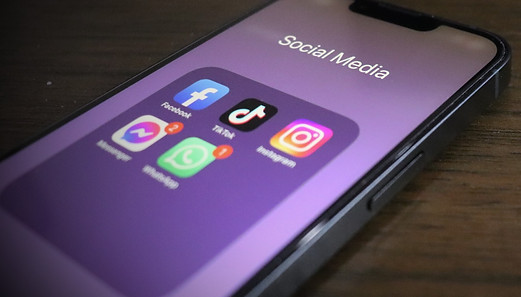
An estimated 4.9 billion people use social media, with reports suggesting users scroll for an average of 2.5 hours each day.
Celebrity and influencer endorsement is a popular means of marketing for wellness products online, often promoting anecdotal evidence to receptive audiences and swaying consumer behaviour.
Dr Gina Cleo is a dietician and world leading expert in habits. She explains how social proof dictates whether people consider behaviour 'normal' or 'desirable' based on if others are doing it.
“In a way, it shapes our culture, it shapes what we think is acceptable or not.”
She explains social media can be positive for disseminating information, [positive] social norms, visualising results, offering accountability, and further suggests some of the trends and challenges can make people “feel like they're part of a community."
However Dr Cleo acknowledges the “dark side” of social media being “the peer pressure, comparing ourselves to others.”
“I do think there's a promotion of self care, which I really do love about the wellness industry. But I also think [it] over emphasises the idea of clean eating and idealised body sizes.”
Some suggest the wellness industry has been co-opted by diet culture, which comes equipped with its own harmful effects. Dr Cleo believes there’s some merit to the idea of “overlap and similarities” between industries, however wellness encompasses a more holistic approach to lifestyle, like sleep, mindfulness, and emotional wellness.
While wellness in the online space can be difficult to regulate, social media exacerbates the hype around different trends and plays a significant part in the digital age.
Nicolette Harper’s social media following skyrocketed when she lost 40kg and started a business. She made gradual lifestyle and dietary changes after trying a number of ‘quick-fixes’ and fad diets first, to no avail.
“There's too many people putting information out for people to readily receive without any backing, without any depth to what they are saying. It's just, 'Here's what I think, and you should do it too ‘cause it worked for me’.”
Nicolette explains education is the foundation of her business helping others on their own fitness and wellness journeys, and encourages people to go to “trusted sources…nutritionists, dietitians, people that have studied” food, health, and wellness.
“The first thing I always tell people is do your research. Is that fat burner going to work because someone who studied it said it [will] and they've got proof? Or does the label say it's going to work because they're trying to make money from it?”
Online spaces provide a vast opportunity for wellness, impacting the consumer market at a global rate with near immediacy. The dangers of social media lie in its ability to normalise potentially harmful behaviours, which go beyond the scope of the wellness industry. One study highlighted the likelihood of women aged 18-35 accepting health advice from social media the same as they would from that of public health communicators.
Though it’s well-known we’re more inclined to post our best selves, or only the ‘good’, users can internalise what they view online, holding themselves to a standard perceived or idealised in comparison.
For Nicolette, who’d gotten used to keeping up appearances online, she would reflect on her posts —of eating healthy, exercising, enjoying holidays— and think “what a lie, what a joke,” she admits.
“In my life, there was hospital trips, tears, sickness, there was so much financial stress, everything was going on underneath, but on the Instagram feed, everything looked great.” She said seeing people “beat themselves up” in comparison motivated her to share more of the reality of her story.
“‘Hey, I've got my period this week and I'm so bloated’...Like ‘I got three hours of sleep last night because I have a baby. Mums, I get you, you're not going to look perfect everyday.’
“That's just the reality of life. But social media pretty much took that away.”
Where do we go from here?
Researchers note the paradoxical relationship between social media and health or wellbeing related initiatives, resources, and products being promoted on such platforms.
E-commerce continues to soar in health and wellness spaces and while online trends come and go, there’s no doubt social media will remain prevalent and pervasive and at the tips of our fingers.
Amidst the positives of social media, Dr Cleo suggests how to stay cognisant and not immediately subscribe to everything you see online.
“Self awareness is very important. Deeply understanding ourselves, our values, our goals, what makes us happy.” She also suggests paying attention to our own body's signals, emotions, and needs.
“And I think that's the importance, as well, of intrinsic motivation—wanting to do something because you want to do it for yourself and you have your own personal reasons for it, rather than doing something because everyone else is doing it, or because this influencer or social media person said that it was a good idea.”
Nicolette Harper also values being mindful of who you’re following online and says she’s had many realisations about her own activity.
“What does it actually mean to follow someone? You follow their teachings, you follow their belief systems. And if you're following people on social media, but you don't align with their teachings, then what does that mean for you as a person?”
We’ve grown accustomed to using social media and adopted it into so many aspects of our lives. As Dr Cleo explains, habits and addictions, while embodying similar characteristics of repeated behaviour, differ in the level of control we have over them, and how much they impact our lives. If picking up our phone has become a subconscious behaviour, especially in a state of idealising growth and progression in the pursuit of being ‘well’, then self-awareness is key in normalising everything else.
“Listening to our bodies because life is full of ebbs and flows,” she says.
“And I would really love to see more promotion of self acceptance and body positivity and a focus on overall health rather than perfectionism—in any of the industries.”
“I think the wellness industry, in a way, is trying to sell us this ideal of happiness. ‘If you do this, everything in your life is going to fall into place and you're going to be your best self’. And I'm sure there's elements or tiny bits of truth in that, but I think it's also an illusion.”
Dr Gina Cleo says.

Cairns Regional Council offers free 'Active Living' fitness classes daily at the Esplanade.

Image shows a phone screen with social media app icons.

Left: Wellness communities on TikTok have dedicated spaces for users to browse content.
Right: Instagram hashtags show the enormity of wellness followers, with related posts amounting in the millions.
